
Why Toronto’s Food Festivals Are Shifting Toward Fusion Concepts in 2026
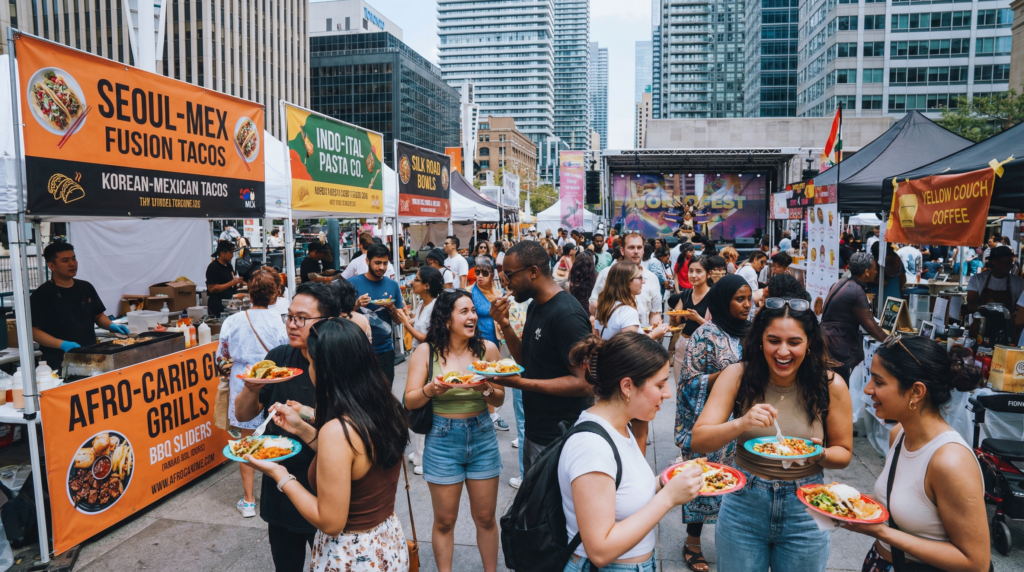
Toronto’s food festival scene is undergoing a noticeable shift. What were once single-cuisine or region-specific food events are evolving into fusion-driven experiences that reflect how people actually eat, socialize, and explore culture in the city. As audiences look ahead to 2026, fusion concepts are becoming central to how food festivals are designed and experienced.
This article explores why Toronto’s food festivals are moving toward fusion formats, how this trend benefits attendees and vendors, and what it means for the future of multicultural food events in the city.
Changing Food Preferences in a Multicultural City
How Toronto’s Diversity Influences Food Culture
Toronto is home to communities from around the world, and its food culture reflects that diversity. Because of this, residents increasingly gravitate toward dishes that combine flavors, techniques, and traditions from multiple cultures.
Rather than sticking to one cuisine, people now seek variety and experimentation. This shift directly influences how food festivals plan their vendor mix.
Fusion as a Reflection of Modern Dining Habits
Fusion food mirrors how people dine in real life. Meals are no longer confined to one cultural influence, and food festivals are adapting by offering hybrid menus that feel familiar yet exploratory.
Why Fusion Concepts Work Better at Food Festivals
Greater Variety in a Single Visit
Fusion-focused festivals allow attendees to sample a wider range of flavors in one visit. Instead of committing to a single cuisine, guests move between vendors offering creative combinations.
This structure encourages discovery while keeping the experience efficient.
Stronger Engagement and Social Sharing
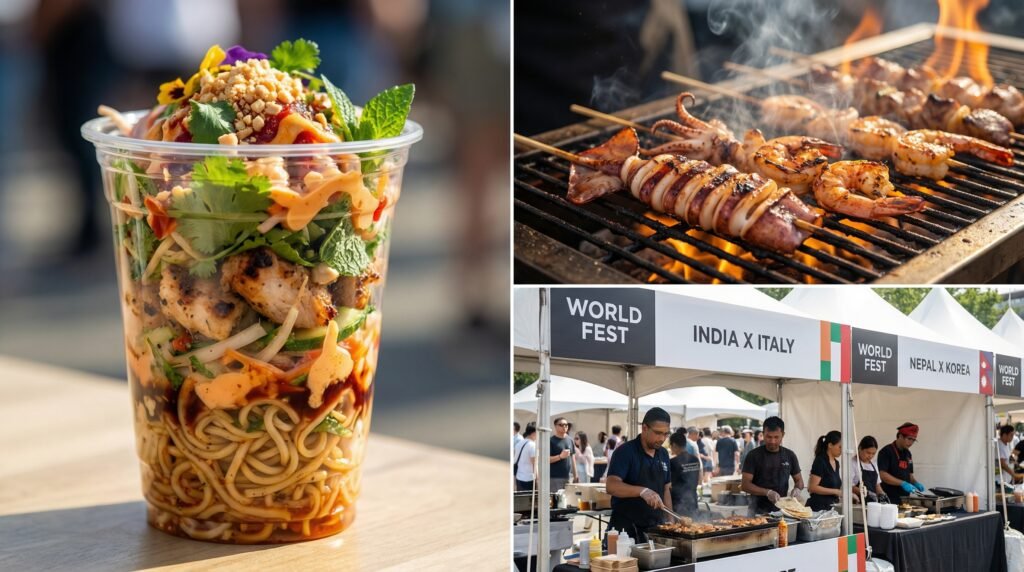
Visually distinctive fusion dishes perform exceptionally well on social media. Because of this, food festivals benefit from organic sharing and extended reach.
In addition, vendors gain exposure beyond the event itself.
Fusion Food and the Vendor Advantage
Lower Barriers to Entry for Food Vendors
Fusion concepts give food vendors flexibility. Rather than being limited to traditional menus, vendors can adapt offerings to broader audiences and test new ideas in a live environment.
Higher Foot Traffic and Broader Appeal
Festivals built around fusion food tend to attract more diverse crowds. This broader appeal benefits vendors by increasing foot traffic and reducing reliance on niche audiences.
Fusion Festivals and Toronto’s Event Landscape
The Rise of Fusion-First Food Festivals
Several Toronto festivals are now embracing fusion as a core concept rather than a side feature. One example is fusion-focused multicultural food festivals, which blend cuisines and performances into a unified experience that reflects the city’s cultural mix.
Alignment With City-Wide Food Trends
This shift aligns with broader culinary trends seen across the city and highlighted by the Toronto food and dining scene, where chefs and food entrepreneurs increasingly experiment with cross-cultural flavors.
What This Shift Means for 2026
A More Inclusive Festival Experience
Fusion-driven food festivals create environments that feel welcoming to all attendees, regardless of background or familiarity with specific cuisines.
The Future of Food Festivals in Toronto
As Toronto’s food festival scene continues to evolve, fusion concepts are expected to play an even larger role. In 2026, these festivals will not only showcase food but also reflect how cultures intersect and influence one another across the city.